


Research paper will focus on international research from the UK on Sibling Sexual Behaviour. It will highlight the research evidence base, resources and approaches that have developed over the past 18 months. Providing guidance for practitioners on how to work with this complex and often nuanced issue (King-Hill et al., 2023; King-Hill, McCartan, and Gilsenan, 2023; McCartan, King-Hill and Gilsenan, 2023; Adams and Crosby, 2022). Leading academics and practitioners from the UK will be running this panel, alongside practitioners in the field. They have extensive research and practice knowledge on SSA/B, both McCartan and King-Hill lead the research and evidence base on the first UK Government Home Office funded National Sibling Sexual Abuse Project.
The session will start with an overview of the international research literature on this topic, setting out the complexities of terminology including what constitutes a sibling and the range of behaviours. In doing this the presentation will outline the research carried out by King-Hill and McCartan, highlighting the reality of SSB and the challenges for preventing and responding to it. The session will then discuss the development of new, innovative, evidence-based sibling sexual behaviour mapping tool (SSB-MT) developed by King-Hill to aid professionals in working with the siblings and family members impacted by the abuse. Before a focus on supporting professionals undertaking assessments, interventions or decision making for children and young people displaying harmful or problematic sexual behaviour within a sibling context.

Prof. Kieran McCartan researches a range of areas including the prevention of a response to sexual abuse, as well as trauma-informed practice. He is currently the Vice-Chair of the National Organisation for the Treatment of Abuse (NOTA).

Dr. Sophie King Hill specialises in sexual behaviours and assessment in children and young people, sexual health, sibling sexual behaviour/abuse, misogyny, relationships & sex education and the importance of youth voice.

David Russell
david.russell@thrivingsurvivors.co.ukDavid Russell is the Development Lead & Service manager at Thriving Survivors. David provides training on a range of themes on sexual violence and has facilitated multi-disciplinary training internationally. He currently sits on the NOTA Scotland executive committee, supporting professionals responding to sexual harm.

Introduction à la justice réparatrice à travers le film « Je verrai toujours vos visages ».
Au Ciné-Campus de l'Université de Montréal, situé au Centre d'essai, Pavillon J.-A.-DeSève, 6e étage.
Le 6 mai 2024 à partir de 17h30
Programme de la soirée :
17h30 : ouverture des portes et projection
20h : début de la discussion
21h : fin
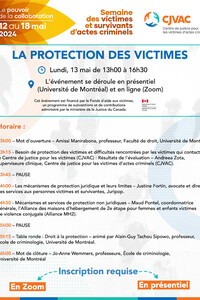
Évènement organisé par le Centre de justice pour les victimes d'actes criminels (CJVAC).
Lundi 13 mai 2024, de 13h00 à 16h30.
L'événement se déroule en présentiel : UdeM – 3200 Jean-Brillant local B-4215 et en ligne (Zoom).
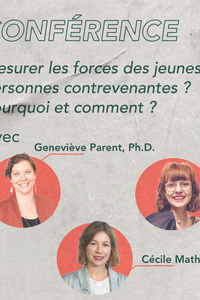
Conférence-midi de Cécile Mathys, Geneviève Parent, Nadège Brassine.
Vendredi 31 mai 2024, de 11h45 à 13h00.
En Zoom seulement.
- L'Université de Montréal est à la recherche d'une ou d'un auxiliaire de recherche dans le cadre d'un projet de recherche de Jo-Anne Wemmers
Date limite de candidature : Le 26 avril au plus tard
Plus de détails
- L'Université de Montréal est à la recherche d'une ou d'un auxiliaire de recherche dans le cadre du projet de recherche, la coercition sexuelle envers la partenaire intime.
Date limite de candidature : Le 26 avril au plus tard
Plus de détails
La médiation à l’épreuve des violences contemporaines : un défi irréaliste ?
Thème de la conférence : en page 3
Thème des tables rondes : en page 4
1. Thèmes des propositions Les participants sont invités à envoyer leurs propositions en réponse aux questions qui structurent les trois tables rondes ou sur un autre sujet qui concerne la médiation, quel qu’en soit le champ d’activité.
- L'ÉNAP est à la recherche d'un/d'une agent/agente de recherche et de planification au sein de l’équipe de la Chaire de recherche sur l’Évaluation des actions publiques à l’égard des jeunes et des populations vulnérables (CREVAJ), une chaire de recherche dont les locaux sont situés à l’ENAP.
Date limite de candidature : Dès que possible
Plus de détails
- L'ÉNAP est à la recherche d'un/d'une agent/agente de recherche et de planification au sein de l’équipe de la Chaire de recherche sur l’Évaluation des actions publiques à l’égard des jeunes et des populations vulnérables (CREVAJ), une chaire de recherche dont les locaux sont situés à l’ENAP.
Date limite de candidature : Dès que possible
Plus de détails
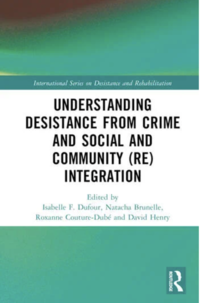
F. Dufour, I., Brunelle, N., Couture-Dubé, R. & Henry, D. (2024). Understanding Desistance from Crime and Social and Community (Re)integration (1e ed.). Routledge.

Leclerc, C., & Euvrard, E. (2023). Négocier sa peine: Enquête au cœur des négociations des plaidoyers de culpabilité. Presses de l'Université du Québec.

Chopin, J., Paquette, S. & Fortin, F. (2023). Crimes sexuels en ligne, délinquants et victimes : théories, recherche et pratique. Presses de l'Université Laval.

Admo, N (2023). La résolution de conflits: guide d'implantation et de pratiques (2e éd.). Les presses de l'Université de Montréal.

Niang, A., Goyette, M., & Brunelle, N. (sous la direction de, 2023). Les droits, la parole et les besoins des jeunes placés au Québec. Criminologie, 56(1).




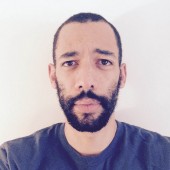

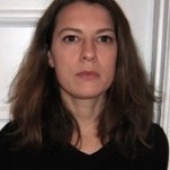



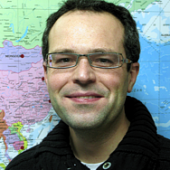




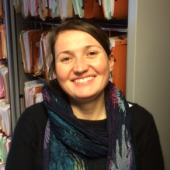


Avec des phénomènes comme la vague MeToo ont été dénoncé des agressions sexuelles dans divers milieux de la société. Une parole semble s’être libérée au sujet des violences sexuelles. Qu’est-ce qu’une violence sexuelle ? Y a-t-il des profils types d’agresseurs ou de victimes ? Et que faire quand on est victime ?

Depuis quelques années, les crimes violents commis par armes à feu font désormais la manchette de façon hebdomadaire, voire quotidienne, au Québec. Cette criminalité apparente engendre un certain sentiment d'insécurité dans la métropole et ses environs. Mais est-ce que l'attention médiatique correspond à la réelle envergure du problème ? Doit-on s'inquiéter et surtout, quelles solutions devraient être mises en place ?

Pour la première fois depuis sa création, la revue Criminologie porte son attention, dans ce numéro thématique (Volume 52, No1), sur ces personnes qui n’ont pas enfreint les normes pénales, ni ne sont des victimes de ces infractions, ni même des agents qui influencent, modifient ou appliquent ces normes. Ce qui les identifie, malgré elles, comme une population hétérogène que la criminologie se doit de mieux connaître, ce sont leurs liens familiaux et affectifs avec une personne judiciarisée.
Ce premier épisode interroge Sandra Lehalle, Caroline Touraut et Vanina Ferreccio sur leurs articles.
Attention - Votre version d'Internet Explorer est vieille de 19 ans et peut ne pas vous offrir une expérience optimale sur le site du CICC. Veuillez mettre à jour votre ordinateur pour une expérience optimale. Nous vous recommandons Firefox ou Chrome, ou encore ChromeFrame si vous êtes dans un environnement corporatif ou académique dans lequel vous ne pouvez pas mettre à jour Internet Explorer.